From Words to Action: Why Cameroon Must Lead with Policy in the Fight Against NCDs
17 Apr 2026 / Article
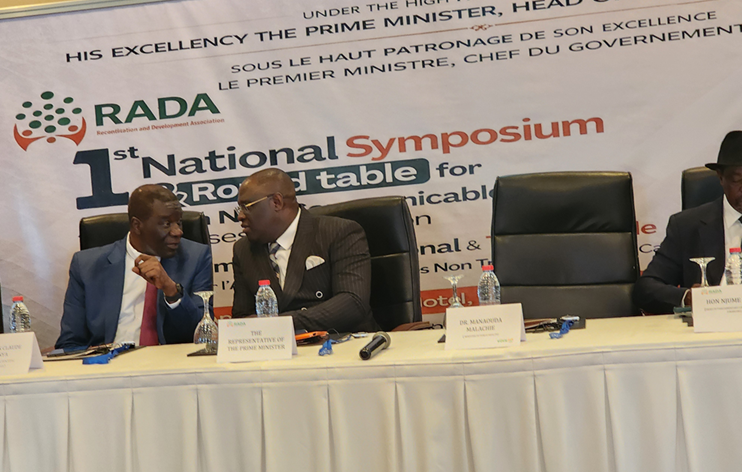
From Words to Action: Why Cameroon Must Lead with Policy in the Fight Against NCDs
At the 1st National Symposium and Round Table for Action on Non-Communicable Diseases (NCDs) in Cameroon, one message cut through every presentation, every debate, every intervention: we cannot treat our way out of this crisis; we must prevent it by acting upstream.
This is not just a health conversation. It was a call to confront the systems driving disease—starting with nutrition, policy, and the environments shaping everyday choices. The Real Battleground: Policy and Prevention
For too long, efforts against NCDs have focused on treatment rather than prevention. Yet the leading risk factor—unhealthy diets—is not simply a matter of individual choice. It is the result of systems that make unhealthy options cheap, accessible, and aggressively promoted.
Panellists emphasised that healthier choices are almost impossible in unhealthy environments. When ultra-processed foods dominate markets, when labels are unclear, and when regulation is weak or poorly enforced, individuals are set up to fail.
Cameroon is not starting from zero. Policies exist. Laws have been drafted, such as Law No. 2018/020 of 11 December 2018, which is the primary framework law regulating food safety and quality in Cameroon. It establishes principles for safe food production, processing, import, and distribution, aiming to protect consumer health, prevent food-borne illnesses, and align with international standards. Nevertheless, the reality remains stark: implementation is weak, coordination is fragmented, and enforcement is inconsistent. This gap between policy and practice is where lives are lost. The parliamentarian in attendance emphasised the importance of consistently involving lawmakers in such initiatives. By doing so, he noted, it becomes possible to translate existing policy ideas into concrete legislative action, enabling Parliament to debate, refine, and ultimately pass the necessary bills to ensure their effective implementation.
Nutrition: The Silent Driver of a National Crisis
Globally, poor diets contribute to tens of millions of deaths each year. In Cameroon, the burden is alarmingly high, with a significant proportion of NCD-related deaths linked directly to what people eat. The science is clear:
- High sugar intake fuels diabetes and obesity.
- Excess salt consumption drives hypertension and cardiovascular disease.
- Reused oils for frying and ultra-processed foods introduce harmful fats that damage long-term health.
Nutrition is no longer a lifestyle issue; it is a public health emergency with deep economic and developmental consequences. It affects healthcare systems, productivity, and the country’s ability to meet its development goals.
Marketing: The Invisible Hand Shaping Diets
One of the most urgent discussions at the symposium focused on food marketing, particularly its impact on children and young people.
Today’s food environment is engineered. Children are not just exposed to unhealthy food advertising—they are targeted. Through digital platforms, algorithms deliver personalised, persuasive content designed to normalise ultra-processed foods. These messages shape preferences early, creating lifelong consumption patterns.
The media, whether digital platforms or radio, play a powerful role in shaping food environments across both urban and rural communities. Without regulation, it becomes a t
ool that undermines public health.
This is why marketing restrictions are not optional but essential. Protecting children from aggressive advertising, especially in and around schools and in digital spaces, must become a national priority.
Consumers Have Rights—But Need Protection
Another key issue raised was consumers´ right to make informed choices. This requires transparency.
Mandatory front-of-package labelling—clear warning signs indicating high sugar, salt, or fat content—was strongly advocated. Without this, consumers are navigating blindly in a market that prioritises profit over health.
However, progress in this area faces resistance—from industries concerned about regulation, economic impact, and market control. This tension is real, but it cannot outweigh the cost of inaction.
A United Effort Across Government and Society
As highlighted during the discussions, the fight against NCDs involves everyone—government, parliamentarians, health professionals, media, civil society, and the private sector. Acceleration of policy implementation requires:
- Stronger coordination across ministries
- Clear regulatory frameworks
- Administrative sanctions for non-compliance
- Systems for monitoring, follow-up, and traceability
This is not just about passing laws. It is about enforcing them consistently and transparently. The symposium also highlighted global examples, including countries like Mexico, where bold measures such as high taxation on unhealthy products have shown measurable impact.
These are not radical ideas. They are proven strategies. The question is whether Cameroon is ready to adopt and adapt them.
The Cost of Delay
Investing in public health, especially in nutrition, is not a short-term expense—it is a long-term national investment. It protects future generations, reduces healthcare costs, and strengthens economic resilience. As emphasised in the opening reflections, Cameroon must commit to a comprehensive nutrition policy that safeguards the health of its population and the future of the nation.
The Bottom Line
NCDs are not inevitable. They are driven by systems we can change. But change demands courage:
- Courage to regulate powerful industries
- Courage to prioritise long-term health over short-term gains
- Courage to turn policies into action
The symposium has done its part. The policies exist. The knowledge is available. The partnerships are forming. Now the real work begins because in the end, this is not just about food or policy. It is about who we protect and what kind of future we are willing to build.

Brunhilda Tambe
Chief of Communication Service, Senior Editor (CAMEROON)